Warsaw Rental Yield by District: Gross, Net and Real Costs
Author: Stanisław Nawrocki, real estate agent · Nawrocki Real Estate, Warsaw
Published · Updated
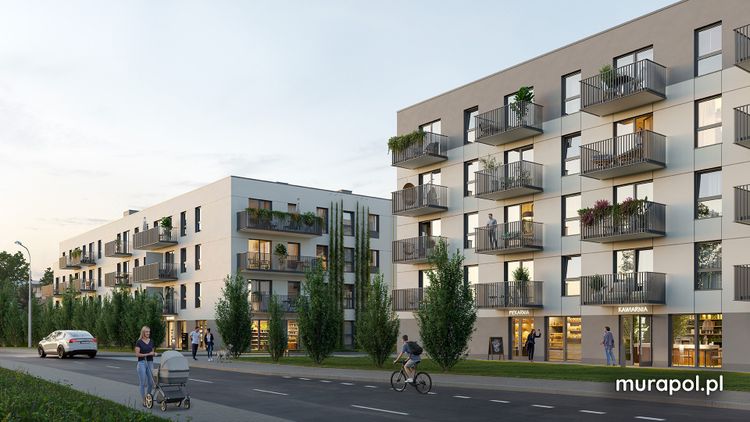
Gross rental yield on a new-build flat in Warsaw ranges from about 4.3% in Żoliborz to 7.5% in Rembertów, based on NAWROCKI rent estimates and median developer prices from notarial deeds (RCN). In the districts where most new flats are sold, such as Białołęka, Ursus and Bemowo, expect roughly 6.7–7% gross, before a flat-rate tax on rent, fit-out, empty months and maintenance bring the net figure down.
Gross vs net yield: the two numbers that matter
Every buy-to-let calculation starts with two figures, and mixing them up is a common source of disappointment.
- Gross yield is the annual rent divided by the purchase price. It is a quick filter for comparing districts and developments.
- Net yield is what is left after tax, vacancies, service charges you pay while the flat is empty, repairs, insurance and letting fees. This is the figure that tells you whether the investment works.
The fastest way to estimate gross yield is per square metre: take the monthly rent per m², multiply it by twelve and divide by the price per m². In Białołęka, for example, NAWROCKI estimates typical asking rent at about PLN 70 per m² a month, while the median price paid to developers is PLN 12,446 per m². Twelve months of rent divided by that price gives roughly 6.7% gross.
Keep in mind what the price in that formula covers. Developers in Warsaw usually hand over flats in stan deweloperski (a shell finish: walls, windows and installations, but no flooring, kitchen or bathroom fittings). Fit-out and furniture are an extra investment, so the gross yields below are a ceiling, not a forecast.
Warsaw rental yield by district
Yields use the median price actually paid to developers, not asking prices; the resale column shows what buyers paid for existing flats.
| District | Typical rent, PLN/m² per month | Median developer price, PLN/m² | Median resale price, PLN/m² | Gross yield at developer price |
|---|---|---|---|---|
| Rembertów | 65 | 10,347 | 12,287 | 7.5% |
| Wawer | 70 | 11,660 | 13,793 | 7.2% |
| Ursus | 74 | 12,738 | 14,772 | 7% |
| Bemowo | 78 | 13,620 | 15,778 | 6.9% |
| Targówek | 78 | 13,621 | 14,692 | 6.9% |
| Ursynów | 80 | 14,085 | 17,000 | 6.8% |
| Białołęka | 70 | 12,446 | 13,672 | 6.7% |
| Włochy | 80 | 14,320 | 16,187 | 6.7% |
| Praga-Południe | 82 | 15,703 | 15,933 | 6.3% |
| Wilanów | 80 | 15,256 | 18,905 | 6.3% |
| Wesoła | 65 | 12,371 | 12,427 | 6.3% |
| Mokotów | 88 | 17,121 | 17,665 | 6.2% |
| Bielany | 80 | 16,655 | 15,365 | 5.8% |
| Praga-Północ | 82 | 17,574 | 16,216 | 5.6% |
| Wola | 92 | 20,696 | 17,896 | 5.3% |
| Ochota | 88 | 19,813 | 16,349 | 5.3% |
| Śródmieście | 100 | 25,814 | 20,769 | 4.6% |
| Żoliborz | 88 | 24,559 | 20,611 | 4.3% |
Source: rents are NAWROCKI estimates of typical asking rent (not transaction data); prices are RCN (Rejestr Cen Nieruchomości, the official register of prices from notarial deeds) medians for transactions registered from 6 November 2024 to 19 December 2025, NAWROCKI analysis.
What the table tells you
The pattern is clear: the cheaper the square metre, the higher the gross yield. Śródmieście has the highest rent at PLN 100 per m², but at PLN 25,814 per m² for a new flat the yield is only 4.6%. Outer districts are much cheaper to buy, while rents fall more slowly than prices.
The resale column adds a second insight. In Śródmieście, Żoliborz, Ochota, Wola, Bielany and Praga-Północ, flats from developers cost more per m² than resale flats, so a well-chosen resale flat with the same rent can yield more. In Białołęka, Ursus, Bemowo, Wilanów and Ursynów it is the other way round, and new-builds are the cheaper entry point. For a deeper look at prices, see our guide to Warsaw property prices per district.
What drives the yield on a specific flat
Three factors move the result for an individual flat most.
The price you pay
Rent does not depend on how much you paid, but yield does. Every zloty of overpayment lowers the percentage for as long as you own the flat. Before signing, compare the developer's price per m² with real deals nearby, for example RCN transaction prices in Bemowo, which show what buyers actually paid rather than what sellers asked.
Transport and planned infrastructure
Tenants pay for commute times. The M2 metro line is being extended into Bemowo, with Lazurowa, Chrzanów and Karolin stations due in 2027. The M2 branch to Ursus and the M3 line in Praga-Południe are still at the planning stage, with indicative dates of 2033 and 2032. Plans can slip, so treat a future station as an option on value, not a guarantee of higher rent.
Size and finish
The median new flat bought in Białołęka or Ursus is about 44 m², while in Wilanów it is over 67 m². Larger flats cost more to finish, and fewer tenants pay a premium rent for them. A durable, neutral finish usually rents faster than a designer one; if you live abroad, turnkey fit-out packages remove the most time-consuming stage.
Costs and taxes: getting from gross to net
The main costs for a Warsaw landlord are:
- Tax on rent. Private rental income in Poland is taxed with ryczałt (a flat-rate tax on revenue): 8.5% of revenue up to PLN 100,000 a year and 12.5% above that. It is charged on the whole rent with no deduction for costs, so it reduces every zloty of income before anything else.
- Vacancies. Between tenants you pay the service charge to the wspólnota mieszkaniowa (the owners' association of the building) and utilities yourself.
- Fit-out and furniture. A one-off cost at the start that increases the amount invested.
- Repairs. Appliances, paint and small fixes add up.
- Insurance and podatek od nieruchomości (the annual local property tax). Small, but recurring.
- Letting and management. If an intermediary finds tenants or manages the flat while you are abroad, the fee comes out of your income.
Purchase taxes matter too. Buying on the secondary market means paying PCC (tax on civil-law transactions) of 2% of market value, collected by the notary. Buying from a developer carries no PCC, because VAT is already included in the price. Our full breakdown of buying costs and taxes in Poland lists the other purchase costs one by one.
Exit timing also counts. If you sell before the end of 5 calendar years, counted from the end of the year of purchase, you pay 19% PIT on the gain, unless the proceeds are spent on your own housing needs within 3 years (ulga mieszkaniowa, the housing relief). Buy-to-let in Warsaw is therefore a multi-year commitment.
Cash or mortgage: how leverage changes the picture
Take the median developer price in Białołęka from RCN data, about PLN 573,000. With a 20% down payment of PLN 114,600, the loan is PLN 458,400. Over 25 years at a typical rate of about 6%, the equal monthly instalment is roughly PLN 2,953.
At PLN 70 per m², a flat of the district's median size, 43.9 m², would rent for an amount close to that instalment. After tax, vacancies and repairs, however, the rent will usually not cover the full instalment, and you top up the difference yourself. With borrowing costs this close to gross yields in most districts, a mortgage does not multiply rental income; it mainly lets you buy with less of your own capital.
The typical 6% is a benchmark built from the NBP reference rate of 3.75% plus a typical bank margin of 2.25%, as of 1 November 2026. Variable-rate loans follow WIBOR, and WIBOR 3M stood at 3.91% on 2 November 2026, so your bank's offer may differ. Use the mortgage borrowing capacity guide to see what banks will lend you.
Cash buyers avoid rate risk but tie up capital. According to NBP, the average transaction price for new flats in Warsaw was PLN 16,783 per m² in Q2 2026, up 2.4% year on year; resale flats averaged PLN 16,723 per m², up 1.3%. Prices are rising, but moderately, so capital growth should be a bonus in your plan, not its foundation.
Buying to let as an expat or international investor
Foreign buyers follow the same process as Poles, with a few extra checks:
- Permits. Buying a separate flat (samodzielny lokal mieszkalny) generally does not require a permit for non-EU citizens, while land and houses can. Confirm your own case in our guide to permits for non-EU property buyers before you reserve a unit.
- Financing. Banks assess your residence status, contract type and income history in Poland. If you plan to leave Warsaw, borrowing may be easier before you go.
- Tax residence. Rent from a flat in Poland is taxed in Poland regardless of where you live; check with an adviser how your home country treats that income.
- Currency. Prices, rents and loans are in PLN; if you earn in another currency, your real return also depends on the exchange rate.
- Management. If you will not be in Warsaw, decide early who handles tenants and repairs, and include that cost in your net yield.
How to buy a flat to rent out in Warsaw: step by step
- Set your budget. Include the down payment or cash price, fit-out, furniture and a reserve for the first months without a tenant.
- Shortlist two or three districts. Weigh yield against transaction volume and transport links.
- Compare several developers. The NAWROCKI catalogue listed 282 developments and 14,785 flats for sale as of 5 November 2026, including 59 developments in Białołęka alone.
- Benchmark the price. Compare the price per m² with the RCN median in the district and negotiate on price or terms.
- Read the documents. The umowa deweloperska (developer agreement) and prospekt informacyjny (information prospectus) set out deadlines, the payment schedule and penalties. Check that payments go into a mieszkaniowy rachunek powierniczy (an escrow-type housing trust account).
- Calculate net yield for this flat. Include fit-out, a realistic rent, tax, vacancies and repairs.
- Complete the odbiór techniczny. At the technical acceptance, defects are listed and the developer has to fix them, not you.
- Prepare the flat and the lease. Finish and furnish, sign an umowa najmu (lease agreement) and pay ryczałt from the first month of rent.
Mistakes that cost Warsaw investors money
- Trusting asking prices. NBP data for Q2 2026 shows an average asking price for new flats in Warsaw of PLN 18,488 per m² against an average transaction price of PLN 16,783 per m². Asking prices rose 6.9% year on year, transaction prices only 2.4%. Negotiation matters.
- Chasing the top percentage. Rembertów has the highest gross yield at 7.5%, but only 89 developer sales in the data period. A thin market means less choice now and a slower sale later.
- Forgetting tax and vacancies. The 8.5% ryczałt and a few empty months turn a 7% gross yield into a noticeably lower net one.
- Skipping developer checks. Construction delays push back the first rent, and with a mortgage every month of delay is an instalment with no tenant.
How NAWROCKI Real Estate helps buy-to-let investors
We work as a buyer's agent for new-build flats in Warsaw, which means we represent you, not the developer. For an investor this covers:
- comparing offers from many developers at once, so you see the whole district market;
- checking the developer's price per m² against real notarial transactions (RCN) in the district;
- reading the umowa deweloperska and the information prospectus and explaining the risks in plain English;
- negotiating price and terms with developers;
- keeping track of the payment schedule;
- helping with the odbiór techniczny so defects are fixed by the developer.
In most developments we work with, the developer pays our fee, so for the buyer the service is usually free. If that is not the case, we tell you before we start.
If you are considering a buy-to-let flat in Warsaw, contact the NAWROCKI team and we will compare developments in your chosen districts and check their prices against real transactions.
Frequently asked questions
What is the average rental yield in Warsaw?
Based on NAWROCKI rent estimates and median developer prices from RCN, gross yields on new-build flats range from 4.3% in Żoliborz to 7.5% in Rembertów. In the large new-build districts of Białołęka, Ursus and Bemowo they are roughly 6.7–7%. Net yield after tax, vacancies and repairs is noticeably lower.
How is rental income taxed in Poland?
Private rental income is taxed with ryczałt, a flat-rate tax on revenue: 8.5% up to PLN 100,000 a year and 12.5% above that. It is charged on the whole rent with no deduction for costs, so build it into your yield calculation from the first month.
Is it worth buying a flat to rent out in Warsaw with a mortgage?
At a typical rate of about 6%, the cost of borrowing is close to the gross yield in most districts, so rent usually covers the instalment rather than producing a profit. A mortgage makes sense if you can top up part of the instalment and plan to hold the flat for many years.
Which Warsaw district has the best rental yield?
The highest gross yields are in Rembertów, Wawer and Ursus, but Rembertów recorded very few developer sales. Białołęka, Ursus and Bemowo combine yields of roughly 6.7–7% with a wide choice of new-builds, and Bemowo is getting M2 metro stations due in 2027.
Can foreigners buy a flat in Warsaw to rent out?
Yes. A separate flat can generally be bought by non-EU citizens without a permit, and it can be let on the same terms as for Polish owners. Rental income from the flat is taxed in Poland, and mortgage access depends on your residence status and income history here.
Districts in this article — check the data
This article in other languages: Polski · Русский · Українська · Deutsch · Türkçe
Read also
- Mortgage in Poland with Foreign Income: Banks, Currency Risk, StepsHow to get a mortgage in Poland when you are paid from abroad: what banks check, złoty vs euro loans, documents, costs and the steps to the keys.
- How to Buy Off Plan in Warsaw: Contracts, Costs and SafetyA practical guide to buying a new-build flat off plan in Warsaw: the three contracts, escrow protection, VAT and notary costs, real transaction prices and the steps in order.
- How to Check a Developer in Warsaw – Step‑by‑Step Guide for ExpatsA practical, data‑driven guide for expats and investors on how to verify a Warsaw developer, from KRS checks to price‑per‑m² analysis and the role of the Developer Guarantee Fund.
Free flat search
We'll match new-build flats to your budget
Pick a budget and a district to see current offers from developers right away. We'll also email you the link.