Can Foreigners Buy Property in Poland? Rules, Taxes and Costs
Author: Stanisław Nawrocki, real estate agent · Nawrocki Real Estate, Warsaw
Published · Updated
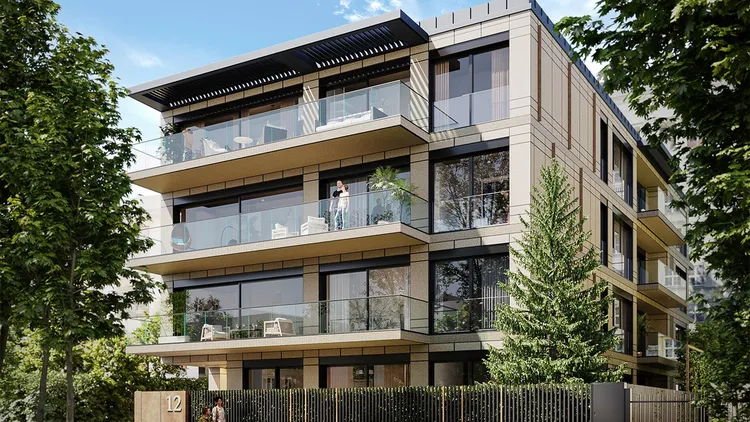
Yes, foreigners can buy property in Poland, and for a flat they usually need no permit at all. Buying an independent residential unit (samodzielny lokal mieszkalny) is exempt from the permit of the Minister of Interior and Administration (MSWiA) even for citizens of countries outside the European Economic Area, while EEA and Swiss citizens never need it for a flat. Houses and land are different, and in Warsaw you are entering a market where the average transaction price of a new flat was 16,783 PLN per m² in Q2 2026, according to the National Bank of Poland (NBP).
Who needs an MSWiA permit and who does not
The key law is the Act of 24 March 1920 on the acquisition of real estate by foreigners. Under it, a foreigner from outside the EEA generally needs a permit from the minister responsible for internal affairs before buying real estate in Poland. The act, however, lists exemptions, and the most important one covers exactly what most expats want to buy: an independent residential unit, meaning a legally separate flat, usually with its own księga wieczysta (land and mortgage register), can be bought without a permit.
Citizens of EU member states, the other EEA countries and Switzerland buy flats on the same terms as Polish citizens. They do not apply to the Ministry of Interior and Administration, do not wait for an administrative decision and sign the notarial deed exactly like a local buyer.
So for most expats in Warsaw, whether they come from the United States, the United Kingdom, India or elsewhere, the question "can I buy?" has a short answer. The harder questions come next: what exactly you are buying, where the money comes from, which taxes you will pay, how to check the seller and what a square metre really costs in the district you like.
| Buyer | Independent flat | House or plot of land |
|---|---|---|
| EU, EEA or Swiss citizen | no permit | generally no permit; separate rules for agricultural and forest land |
| Non-EEA foreigner, e.g. from the US, UK or India | no permit | permit from MSWiA usually required |
Flat, house or land: why the type of property matters
The statutory exemption applies to an independent residential unit. It does not automatically cover a detached house, a terraced or semi-detached house sold together with its land, or a building plot. If a non-EEA expat wants a house with a garden outside Warsaw, they should expect the MSWiA permit procedure: an application, documents showing ties to Poland and patience while the decision is made. The rules for houses and land are noticeably stricter than for flats. We cover the procedure in our guide on how non-EU buyers get a permit to buy property.
A few borderline cases are worth checking before you sign anything:
- A flat without separate ownership. A cooperative ownership right to a flat (spółdzielcze własnościowe prawo do lokalu) is a different right from separate ownership of a unit. Its status under the foreigners act should be confirmed with the notary.
- Parking spaces and storage units. Developers sell them either as separate units or as shares in an underground garage. The notary assesses their legal status separately.
- Semi-detached and terraced units. Some are sold as flats, others as houses with land. That decides whether a permit is needed.
The practical rule is simple: before you pay any deposit, find out exactly what you will own. For new flats in Warsaw apartment buildings the answer is usually clear. It is an independent residential unit, and no permit is needed.
Taxes and fees: new build or resale
A foreign buyer pays the same taxes and fees as a Polish buyer. The difference between the primary market (buying from a developer) and the secondary market (resale) matters a lot for your budget.
When you buy from a developer, VAT is already included in the price. Under the Polish VAT Act the rate is 8% for usable floor area up to 150 m² and 23% on any part above that threshold. A parking space or storage unit sold as a separate unit is usually taxed at 23%. There is no tax on civil-law transactions (PCC, podatek od czynności cywilnoprawnych) on a purchase from a developer.
On the secondary market the buyer pays PCC of 2% of market value, collected by the notary, under the Act on the tax on civil-law transactions. Since 2023 a buyer of a first own flat on the secondary market can be exempt if the statutory conditions are met. Expats often ask whether a home they own abroad disqualifies them. That point should be confirmed with the tax office (urząd skarbowy) or a tax adviser before you set your budget.
| Resale flat price | PCC 2% | Court fee for entry of ownership | PCC on the mortgage, if you borrow |
|---|---|---|---|
| 500,000 PLN | 10,000 PLN | 200 PLN | 19 PLN |
| 800,000 PLN | 16,000 PLN | 200 PLN | 19 PLN |
| 1,200,000 PLN | 24,000 PLN | 200 PLN | 19 PLN |
The notary fee (taksa notarialna) has only a statutory maximum set by the Minister of Justice, so it can be negotiated; 23% VAT is added to it. Entering a mortgage in the land register costs another 200 PLN. If you do not speak Polish fluently, a sworn translator must attend the signing of the notarial deed. Budget for that from the start, together with fit-out, because new flats in Warsaw are usually handed over in developer standard (stan deweloperski), without finishing.
What a flat in Warsaw really costs: notarial deed data
Asking prices are not the prices flats actually sell for. According to the NBP, the average asking price on the Warsaw primary market in Q2 2026 was 18,488 PLN per m², while the average transaction price was 16,783 PLN per m². On the secondary market the average transaction price was 16,723 PLN per m².
Our analysis of the RCN register (Rejestr Cen Nieruchomości, prices taken from notarial deeds) covers transactions registered from 18 November 2024 to 19 December 2025. In that period, 14,101 flats were sold by developers and 14,191 on the secondary market across 18 Warsaw districts. Depending on the district, the median developer price ranged from 10,347 PLN to 25,917 PLN per m².
| District | Median PLN/m², new build | Median PLN/m², resale | Median price of a new flat |
|---|---|---|---|
| Białołęka | 12,482 | 13,672 | 574,793 PLN |
| Ursus | 12,773 | 14,766 | 596,946 PLN |
| Bemowo | 13,624 | 15,809 | 660,707 PLN |
| Włochy | 14,308 | 16,151 | 678,714 PLN |
| Praga-Południe | 15,707 | 15,932 | 744,923 PLN |
You can explore the full district figures, for example RCN transaction prices in Białołęka. Our catalogue of new developments, updated on 13 November 2026, lists 280 developments and 15,051 flats for sale; the cheapest flat in Białołęka was listed at 339,000 PLN. For an expat who does not know the local market yet, comparing a developer's price list with notarial transaction prices in the same district is the simplest protection against overpaying.
Getting a mortgage as a foreigner
Foreigners can finance a purchase with a loan from a Polish bank, but banks assess these applications more cautiously. They typically look at legal residence in Poland, income earned in Poland or in the loan currency, and employment history. Requirements differ from bank to bank, so talk to a mortgage broker before you sign anything with a developer. Our separate guide explains the mortgage requirements for foreigners in Poland.
Under Recommendation S of the Polish Financial Supervision Authority (KNF), banks normally require a down payment of at least 20% of the property value; 10% is possible when the missing part is additionally secured, for example insured. An example: for a flat priced at 756,000 PLN (the median of district primary-market prices from RCN), a 20% down payment is 151,200 PLN and the loan is 604,800 PLN. Over 25 years at a typical rate of 6%, the equal monthly instalment is about 3,897 PLN.
That typical rate is, in simple terms, a base rate close to the NBP reference rate (3.75%) plus a bank margin of around 2.25%; rates are as of 15 November 2026. For comparison, WIBOR 3M stood at 3.9% on 16 November 2026. If you fund the purchase with money from abroad, expect the bank and the notary to ask where it comes from.
How to buy a flat in Poland as a foreigner: step by step
- Confirm what you are buying. An independent flat needs no permit; a house or land usually does if you are a non-EEA citizen.
- Prepare your documents. A passport, a PESEL number if you have one, and income documents if you need a mortgage. See our full list of documents needed to buy an apartment in Poland.
- Open a Polish bank account. It makes payments to the developer and settlement with the notary much easier.
- Document the source of funds. Notaries and banks apply the Polish anti-money-laundering act and may ask for bank statements, sale agreements or gift deeds.
- Check the property. For a resale flat, read the land register online in the Electronic Land and Mortgage Registers. For a new build, read the developer's information prospectus (prospekt informacyjny) and the draft developer agreement (umowa deweloperska).
- Benchmark the price. Compare the price list with the RCN median in the same district and negotiate on that basis.
- Sign at the notary. First the developer or preliminary agreement, then the agreement transferring ownership, with a sworn translator if you do not speak Polish.
- Take over the flat and follow the registration. For a new build, carry out the technical acceptance (odbiór techniczny); the notary usually files the application for entry in the land register.
If you cannot be in Poland for the signing, you can act through an attorney. A power of attorney to buy real estate must be made in the form of a notarial deed, and one made abroad usually needs additional certification and a sworn translation.
Common mistakes and risks
Not needing a permit for a flat does not make the purchase simple. Foreign buyers most often lose money when they:
- confuse ownership with residence rights. Buying a flat does not by itself give you a residence permit; read whether buying property in Poland gives you residency before you plan around it.
- pay before checking the developer or the land register. Under the Developer Act of 20 May 2021, buyer payments go to a residential escrow account (mieszkaniowy rachunek powierniczy) and are additionally protected by the Developer Guarantee Fund (DFG), but only when the agreement is made in the required form.
- treat the price list as the market price. The gap between asking and transaction prices in NBP data shows that negotiation makes sense.
- forget the extra costs. VAT in the price, PCC on resale, the notary, a translator and fit-out add up to more than the advertised price.
- transfer money from abroad without paperwork. The bank may hold the transaction until the source of funds is explained.
- sign documents in a language they do not understand. A sworn translator at the notarial deed is mandatory if a party does not speak Polish.
For legal and tax questions, consult a notary, a lawyer or a tax adviser, especially if you are tax resident in another country or plan to rent the flat out.
How NAWROCKI Real Estate helps
We work as a buyer's agent for new-build flats in Warsaw. For buyers from abroad this means concrete support at every stage:
- we compare offers from many developers at once instead of pushing one development;
- we check the developer's price per m² against real notarial transactions (RCN) in the district;
- we read the developer agreement (umowa deweloperska) and the information prospectus;
- we negotiate price and terms with developers;
- we keep track of the payment schedule;
- we help with the technical acceptance of the flat.
In most developments we work with, the developer pays our fee, so for the buyer the service is usually free. If that is not the case, we say so before we start.
If you are thinking about buying a flat in Warsaw and want to go through the process calmly and with full information, get in touch with us. We will start with a conversation about your budget, district and timeline.
This article is general information, not legal, tax or financial advice. Consult a notary, lawyer, tax adviser or mortgage broker before making a decision.
Sources
- Ustawa z 24 marca 1920 r. o nabywaniu nieruchomości przez cudzoziemców (ISAP)
- Ustawa z 11 marca 2004 r. o podatku od towarów i usług (ISAP)
- Ustawa z 9 września 2000 r. o podatku od czynności cywilnoprawnych (ISAP)
- Ustawa z 1 marca 2018 r. o przeciwdziałaniu praniu pieniędzy oraz finansowaniu terroryzmu (ISAP)
- Elektroniczne Księgi Wieczyste — Ministerstwo Sprawiedliwości
- Ministerstwo Spraw Wewnętrznych i Administracji
Frequently asked questions
Can an American buy property in Poland?
Yes. US citizens, like other non-EEA foreigners, can buy an independent flat in Poland without an MSWiA permit. A permit is usually required for a house or a plot of land. If you need a mortgage, banks will also look at your legal residence and income.
Does buying property in Poland give you residency?
No. Owning a flat is not in itself a basis for a residence permit in Poland. Residence decisions are made by the voivodeship office on grounds such as work, study or family.
Can a foreigner get a mortgage in Poland?
Yes, but banks usually require legal residence and documented income. Under Recommendation S the down payment is normally at least 20% of the property value, or 10% with additional security. Terms vary between banks, so compare offers with a mortgage broker.
Do I have to be in Poland to sign the notarial deed?
Not necessarily. You can give a trusted person a power of attorney in the form of a notarial deed, and they sign on your behalf. If you sign in person and do not speak Polish, a sworn translator must be present.
What taxes does a foreigner pay when buying a flat in Poland?
The same as a Polish citizen. When buying from a developer, VAT is included in the price and no PCC is due. On the secondary market, PCC is 2% of market value and is collected by the notary.
Districts in this article — check the data
This article in other languages: Polski · Русский · Українська · Deutsch · Español · Türkçe
Read also
- How to Safely Buy a New‑Build Apartment in WawerA practical, data‑driven guide to purchasing a developer’s flat in Wawer, Warsaw – from price checks to hand‑over inspection and the role of a buyer’s agent.
- Best Value New-Build Apartments in Warsaw: Price vs QualityWhere a new apartment in Warsaw gives you the most per square metre: Białołęka, Ursus, Bemowo, Targówek, Włochy and Praga-Południe, based on RCN deeds and developer price lists.
- Warsaw New Developments Map: How to Read It Before You BuyA map of new developments shows where Warsaw developers are selling flats. Here is how to read it alongside RCN transaction prices, metro plans and rents.
Flats matched to your budget
We'll match new-build flats to your budget
Pick a budget and a district to see current offers from developers right away. Add your e-mail and we'll send the link too.