Warsaw New Developments Map: How to Read It Before You Buy
Author: Stanisław Nawrocki, real estate agent · Nawrocki Real Estate, Warsaw
Published · Updated
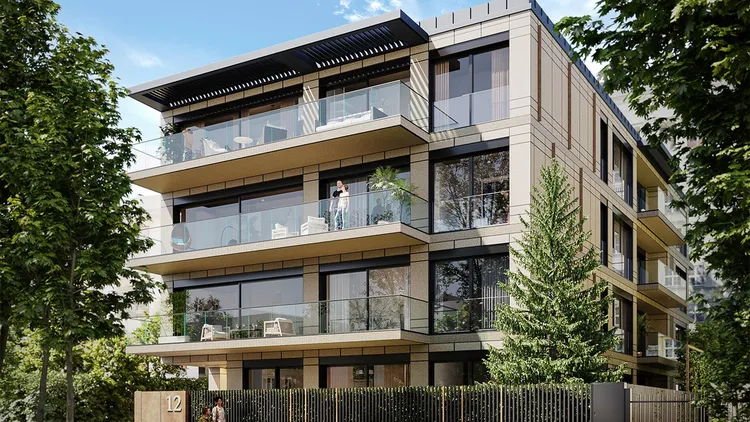
A map of new developments in Warsaw is the quickest way to see where developers are actually selling flats today: the NAWROCKI catalogue (updated 2026-11-18) lists 281 developments with 15082 units on sale. The map alone does not tell you whether a price is fair, though, so every pin should be checked against prices from notarial deeds in the same district.
What a new developments map shows, and what it leaves out
An investment map is a set of primary-market projects (rynek pierwotny, buying directly from a developer) plotted on the city plan. A good map shows, for each project, the developer, the district, the number of available units, the asking price per square metre and the cheapest flat on offer. Our map of new developments in Warsaw runs on the same catalogue as the listings page, so the figures on the map and in the tables match.
It helps to separate two kinds of price from the start:
- asking price (cena ofertowa) – what the developer puts in the price list; negotiation starts here,
- transaction price (cena transakcyjna) – what buyers actually paid, recorded in the notarial deed and in RCN (Rejestr Cen Nieruchomości, the public register of prices taken from notarial deeds).
A map mostly shows asking prices. That is a sensible way to narrow your search, but it is not enough to judge whether a particular flat is worth its price. For that you need transaction prices from the same district, ideally split into new-build and resale.
A map also answers questions a single listing cannot: how many other projects are rising nearby, whether there is a metro line or a planned station close by, and whether a district is a handful of large schemes or many small buildings. All of this shapes the competition you will face later, both when you resell and when you look for tenants.
Where in Warsaw developers are building most
Białołęka has by far the most projects in the catalogue, and on the map it is visibly the densest area. It is followed by Włochy, Wola, Mokotów and Praga-Południe. The table shows the five districts with the largest number of developments on sale.
| District | Developments | Units on sale | Min. asking price (PLN/m²) | Median asking price (PLN/m²) | Cheapest flat (PLN) |
|---|---|---|---|---|---|
| Białołęka | 59 | 2722 | 9499 | 13908 | 339000 |
| Włochy | 28 | 671 | 11699 | 17425 | 491463 |
| Wola | 26 | 1045 | 17700 | 28470 | 527200 |
| Mokotów | 26 | 796 | 14990 | 22550 | 545900 |
| Praga-Południe | 22 | 824 | 12200 | 18735 | 528982 |
Source: NAWROCKI catalogue of new developments (developers' price lists), updated 2026-11-18; asking prices, not transaction prices.
Two conclusions follow. First, the number of projects says nothing about price: Wola has fewer developments than Białołęka, yet its median asking price is far above the lowest rates in the north of the city. Second, the spread inside a single district is wide – the minimum asking price and the median are far apart, so a "cheap district" does not mean every project in it is cheap. For a closer look at one area, see new developments in Białołęka.
Asking price versus notarial deed price
The single most important lesson when reading the map: the price in a developer's list is not the same as the price flats in the area actually sell for. You can see this by comparing the median asking price from the catalogue with the median primary-market transaction price from RCN.
| District | Median asking price, catalogue (PLN/m²) | Median transaction price, RCN new-build (PLN/m²) | New-build deals in RCN |
|---|---|---|---|
| Białołęka | 13908 | 12502 | 2168 |
| Włochy | 17425 | 14322 | 1365 |
| Wola | 28470 | 20764 | 1004 |
| Mokotów | 22550 | 17403 | 641 |
| Praga-Południe | 18735 | 15712 | 1484 |
Source: RCN – transactions registered from 2024-11-24 to 2025-12-19, medians adjusted by the district price index (NAWROCKI analysis); catalogue as of 2026-11-18.
Part of the gap is down to timing: the RCN data covers an earlier period, and prices rose in the meantime. But figures from NBP (Narodowy Bank Polski, the Polish central bank) show that asking prices are rising faster than paid prices. In Q3 2026 the average asking price for new-build flats in Warsaw was 18839 PLN/m² (up 8.6% year on year), while the average transaction price was 16755 PLN/m² (up 2.8% year on year). Flats are selling clearly below list prices, and over the last year that gap has widened.
For a buyer the takeaway is simple: compare the price on the map with what people actually paid for similar flats in the same district. Deed prices for every district are on our RCN transaction prices in Warsaw page.
Metro and transport: the layer a price list does not show
A developments map becomes far more useful once you lay transport plans over it. A new metro station changes commuting times, and with them demand from tenants and buyers. The plans we take into account are:
- M2 in Bemowo – under construction, due 2027, stations Lazurowa, Chrzanów and Karolin,
- M2 in Ursus – planned, due 2033, stations Ursus Północny, Posag 7 Panien and Ursus Niedźwiadek,
- M3 in Praga-Południe – planned, due 2032, stations from Dworzec Wschodni via Mińska, Rondo Wiatraczna, Ostrobramska and Jana Nowaka-Jeziorańskiego to Gocław.
Bemowo and Ursus are also among the busiest districts for new-build sales: RCN shows 2170 deals in Ursus at a median of 12791 PLN/m² and 1486 deals in Bemowo at a median of 13625 PLN/m². The map is dense there, and the metro may change how these districts are valued over time.
Caution is still needed. A planned line is not a line under construction: deadlines slip, and developers often price part of the expected effect in already. When choosing a flat "near the metro", check the walking distance to a specific station rather than relying on the district name.
Using the map for a buy-to-let purchase
If you are buying to let, the map helps you gauge competition: the more new units nearby, the more similar rental listings will appear once the buildings are handed over. The second factor is how rent compares with the purchase price. The agency's estimates of typical asking rents look like this:
- Białołęka – about 70 PLN/m² a month, gross yield about 6.7% at the median new-build price,
- Bemowo and Ursus – 78 and 74 PLN/m² respectively, gross yield about 6.9%,
- Praga-Południe – about 82 PLN/m², gross yield about 6.3%,
- Mokotów – about 88 PLN/m², gross yield about 6.1%,
- Wola – about 92 PLN/m², gross yield about 5.3%.
These are estimates, not transaction data, and gross yields before costs, tax and vacancies. They still show a pattern: in expensive central districts rent per square metre is higher, but rent relative to price is often weaker than on the outskirts. Private rental income is taxed with a flat rate (ryczałt) of 8.5% of revenue up to 100000 PLN a year and 12.5% above that. For more on choosing a location, read the best Warsaw districts to invest in apartments.
If you plan to use a mortgage, work out the monthly payment before comparing projects. Example: a flat at 753000 PLN (the median of district new-build prices in RCN), a 20% down payment of 150600 PLN and a loan of 602400 PLN over 25 years at a typical rate of about 6% (as of 2026-11-15) gives an equal monthly instalment of about 3881 PLN. You can run your own numbers in our mortgage and affordability calculator.
How to use a new developments map, step by step
- Set your budget and instalment. Before you open the map, work out what price your down payment and creditworthiness (zdolność kredytowa) allow.
- Narrow down districts. Compare the median transaction price and the number of deals in RCN – more deals mean a more reliable median.
- Browse projects on the map. Note the developments within budget, their construction stage and the number of units left.
- Check transport. Walking distance to the metro, tram or rail, plus planned lines and their real status.
- Compare the list price with deed prices. If an offer sits well above the district's median transaction price, find out why: finish standard, floor, view, orientation, completion date.
- Read the documents. The information prospectus (prospekt informacyjny) and the draft developer agreement (umowa deweloperska, the main contract for buying a flat under construction) show the payment schedule, deadlines and penalties.
- Negotiate. The gap between asking and transaction prices is an argument when discussing the price, a parking space or a storage unit.
- Prepare for handover. The technical acceptance (odbiór techniczny, the inspection before you receive the keys) is when defects are easiest to have recorded and fixed.
Common mistakes when picking a project from the map
- Judging price from the price list alone. An asking price does not tell you what others paid. Always compare with transaction prices in the same district.
- Treating a district as one market. In Białołęka the minimum asking price is 9499 PLN/m² and the median 13908 PLN/m² – the differences between projects are larger than between some districts.
- Buying "for the metro" without checking its status. A line under construction and a planned line are two different situations.
- Ignoring nearby competition. Many projects completed at the same time mean many similar flats for rent and for resale.
- Forgetting tax on a quick resale. Selling before the end of 5 calendar years counted from the end of the year of purchase means 19% PIT on the income, unless the proceeds go on your own housing needs within 3 years (ulga mieszkaniowa).
- Mixing up new-build and resale costs. Buying from a developer, you pay no PCC (tax on civil-law transactions) because VAT is included in the price; on the resale market PCC is 2% of market value and is collected by the notary.
Checklist before you reserve a flat
Before signing a reservation agreement (umowa rezerwacyjna), ask yourself:
- do I know the median new-build transaction price in this district and how the offer compares,
- have I compared several projects from the map within the same budget,
- have I checked the commute at rush hour, not just on the map,
- have I read the information prospectus and the draft developer agreement, including the payment schedule,
- do I know when the developer plans the technical acceptance and the transfer of ownership,
- have I calculated the mortgage payment and the cost of finishing the flat.
If any answer is "no", go back to the map and the transaction data before you pay a reservation fee. For buyers from abroad, unfamiliar with Polish documents, this step-by-step check matters even more than the location itself.
How NAWROCKI Real Estate helps
We act as a buyer's agent for new-build flats in Warsaw. For us the map is where the work starts, not where it ends:
- we compare offers from many developers at once, including projects that look alike on the map,
- we check the developer's price per square metre against real notarial transactions (RCN) in the district,
- we read the developer agreement (umowa deweloperska) and the information prospectus,
- we negotiate price and terms with the developer,
- we keep track of the payment schedule,
- we help with the technical acceptance of the flat.
In most developments we work with, the developer pays the agency's fee, so for the buyer the service is usually free. Where that is not the case, we say so before we start.
If you want to move from the map to a short list of projects with prices checked against notarial deeds, contact us and we will prepare a shortlist for your budget and preferred districts.
Frequently asked questions
How many new developments are on sale in Warsaw?
The NAWROCKI catalogue, updated 2026-11-18, lists 281 developments with 15082 units on sale. Białołęka has the most projects, with 59 developments.
Is the price on the map the price I will pay?
No. The map shows prices from developers' price lists, which are asking prices. The prices buyers actually paid are recorded in RCN and are usually lower than asking prices in the same district.
Where are the cheapest new-build flats in Warsaw?
Among the districts with the most projects, Białołęka has the lowest list prices, with a minimum of 9499 PLN/m² and the cheapest flat at 339000 PLN. In RCN data the lowest new-build median transaction price is in Rembertów at 10355 PLN/m², though with few deals.
Is it worth buying near a future metro station?
It can be, but separate lines under construction from planned ones. M2 in Bemowo is being built with a 2027 target, while the Ursus section and M3 in Praga-Południe are planned for 2033 and 2032. Check the walking distance to the station and whether the developer has already priced the metro in.
Do I pay PCC tax when buying from a developer in Poland?
No. When you buy from a developer, VAT is included in the price and PCC is not charged. On the resale market PCC is 2% of market value and the notary collects it.
Districts in this article — check the data
This article in other languages: Polski · Русский · Українська · Deutsch · Español · Türkçe
Read also
- New-Build Apartments in Włochy, Warsaw: Prices and Buying GuideWhat new-build apartments in Włochy really cost, why developer price lists sit above notarial deal prices, and how to buy safely from reservation to handover.
- New Developer Projects in Warsaw 2026 – What Expats Need to KnowA concise guide to buying a new‑build flat in Warsaw in 2026: market overview, costs, legal steps and how NAWROCKI Real Estate can protect your investment.
- Warsaw Property Prices per m2 in 2026: Every District ComparedWhat buyers really pay per m2 in Warsaw: from PLN 10,310 in Rembertów to PLN 25,770 in Śródmieście (RCN deals), NBP averages for Q2 2026 and a step-by-step price check.
Flats matched to your budget
We'll match new-build flats to your budget
Pick a budget and a district to see current offers from developers right away. Add your e-mail and we'll send the link too.