Property tax rate in Poland: what you need to know
Author: Stanisław Nawrocki, real estate agent · Nawrocki Real Estate, Warsaw
Published · Updated
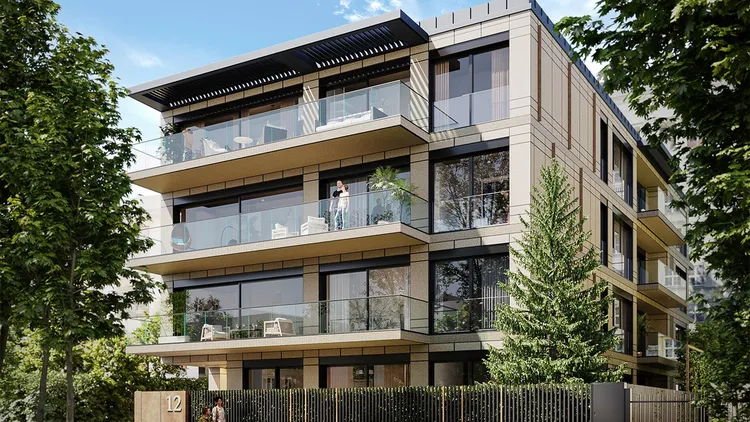
Property tax in Poland is mainly the PCC (tax on civil‑law transactions) of 2 % on secondary‑market purchases and VAT on new‑build flats (8 % up to 150 m², 23 % above).
What is PCC and when does it apply?
PCC is a one‑time tax collected by the notary when you transfer ownership of a property bought from a private seller. It is 2 % of the transaction price. For example, buying a flat for 500 000 PLN incurs 10 000 PLN PCC.
- New‑build purchases: PCC is not charged; VAT is included in the price.
- First‑time buyers: since 2023, you may be exempt from PCC if you meet statutory conditions (no prior ownership, no mortgage, etc.).
| Purchase type | Tax applied | Rate | Example (500 000 PLN) |
|---|---|---|---|
| Secondary market | PCC | 2 % | 10 000 PLN |
Data source: Statutory regulations (Ustawa 2000‑09‑09, Ustawa 2004‑03‑11).
VAT on new‑build flats
When buying from a developer, the price already includes VAT. The rate depends on the usable area:
- ≤150 m²: 8 % VAT.
- >150 m²: 23 % VAT on the portion above 150 m².
A parking space or storage unit sold separately is normally taxed at 23 %.
Other costs that follow the purchase
| Cost | What it covers | Typical amount |
|---|---|---|
| Notary fee (taksa notarialna) | Legal verification | 200 PLN (plus 23 % VAT) |
| Land‑register entry | Ownership record | 200 PLN |
| Mortgage PCC | Securing a loan | 19 PLN |
| Private rental income tax | Rental profit | 8.5 % up to 100 000 PLN, 12.5 % above |
Source: Statutory regulations (Ustawa 1998‑11‑20, Ustawa 1991‑07‑26).
How to calculate the total cost of buying a flat
- Determine the purchase price – use the median price per m² from RCN data.
- Add PCC (if secondary market) or VAT (if new build).
- Add notary and land‑register fees.
- Include mortgage PCC if you take a loan.
- Add any additional costs (brokerage, fit‑out, insurance).
- Purchase price: 500 000 PLN
- PCC: 10 000 PLN
- Notary + land‑register: 400 PLN
- Mortgage PCC: 19 PLN
Practical steps for expats buying in Warsaw
- Research market prices – check RCN data for your district.
- Decide between new build and resale – compare VAT vs PCC.
- Engage a buyer’s agent – NAWROCKI checks developer prices against RCN, reads the umowa deweloperska and negotiates terms.
- Arrange financing – use our mortgage calculator or talk to a bank.
- Sign the contract – ensure all fees are listed and the notary collects PCC if applicable.
- Complete technical acceptance (odbiór techniczny) – we can help you inspect the flat before closing.
Common mistakes and risks
- Ignoring VAT calculation – many buyers underestimate VAT on new builds.
- Overlooking PCC exemption – first‑time buyers may miss the exemption.
- Not verifying developer price per m² – developers often quote inflated prices; we compare against RCN data.
- Skipping technical acceptance – defects may surface after purchase.
Annual Property Tax in Warsaw: How It Is Calculated
In Poland, the local property tax (podatek od nieruchomości) is levied by the city council. Warsaw sets its own rates each year within the limits defined by national law. The tax base is the declared usable area of the flat, measured in square metres, multiplied by the applicable rate for the district. Rates differ between residential and non‑residential units and may also vary for new‑build versus older properties.
- Cadastral value – this is a notional value assigned by the municipal office, usually lower than the market price. It is published annually and can be checked on the city’s online portal.
- Payment schedule – the tax is payable in two instalments, typically by the end of March and September. Late payment incurs interest as stipulated by the municipal regulations.
For a detailed overview of Warsaw’s property‑tax rules, see our guide at /en/blog/property-tax-in-poland.
Documentation Required for Property‑Tax Registration
When you acquire a flat, the notary automatically registers the change of ownership in the land‑register. However, you must still submit a separate declaration to the Warsaw City Hall to be entered into the property‑tax register. The following documents are normally required:
- Copy of the notarial deed (akt notarialny) confirming the purchase price and the buyer’s identity.
- Certificate of cadastral value for the flat, obtainable from the municipal office or online portal.
- Proof of residence (if you intend to claim the residential‑property‑tax exemption).
- Bank statement confirming the payment of the purchase price, especially when the transaction is financed by a mortgage.
- Completed property‑tax declaration form (available on the city’s website).
The declaration must be filed within 30 days of the ownership transfer; otherwise, the tax office may assess the tax based on the default cadastral value. For a step‑by‑step checklist, refer to /en/blog/poland-property-buying-costs.
Typical Pitfalls and How to Avoid Them
| Pitfall | Consequence | Preventive measure |
|---|---|---|
| Forgetting to submit the property‑tax declaration on time | Late‑payment penalties and possible tax reassessment | Mark the filing deadline in your calendar and submit the documents electronically if possible |
| Using an outdated cadastral value | Overpaying the tax or facing a correction notice | Request the latest cadastral statement before completing the declaration |
| Assuming VAT paid on a new‑build flat covers the property tax | VAT and property tax are separate obligations | Remember that VAT is a consumption tax, while property tax is an annual municipal levy |
| Not informing the tax office of a change in usage (e.g., converting a residential flat into a home office) | Incorrect tax rate applied, leading to fines | File an amendment to the declaration promptly after any change in use |
Comparing Property‑Tax Burdens Across Warsaw Districts
Because each district sets its own rates within the statutory range, the annual tax payable can differ noticeably. For example, districts with a higher proportion of new developments, such as Wola and Mokotów, often adopt rates at the lower end of the range to attract buyers, while peripheral districts may apply slightly higher rates to compensate for lower property turnover.
A quick way to compare current rates is to consult the municipal portal’s district‑wise tables or use our interactive map at /mapa-inwestycji, which overlays tax rates with recent transaction prices from the RCN dataset.
When Can You Claim an Exemption?
Polish law provides several exemptions that can reduce or eliminate the annual property tax for certain owners:
- First‑time home buyers who acquire a flat as their primary residence may qualify for a temporary exemption, subject to income limits and a maximum duration of two years.
- Owners of flats used for social housing or charitable purposes are often fully exempt.
Eligibility criteria are defined by the city council each year. To verify whether you qualify, consult the official Warsaw tax office website or contact our team via /kontakt.
How NAWROCKI Real Estate helps
As a buyer’s agent for new‑build flats, NAWROCKI compares offers from multiple developers, checks the developer’s price per m² against RCN transactions, reads the umowa deweloperska and the information prospectus, negotiates price and terms, tracks the payment schedule and assists with the technical acceptance (odbiór techniczny). In most developments the developer pays our fee, so the service is usually free for the buyer.
Ready to navigate Polish property taxes with confidence? Contact us today: contact us.
This article is general information, not legal, tax or financial advice. Consult a notary, lawyer, tax adviser or mortgage broker before making a decision.
Sources
Frequently asked questions
What is the PCC tax rate in Poland?
PCC is 2 % of the transaction price for secondary‑market purchases of real estate.
Is VAT applied to new‑build flats in Warsaw?
Yes, 8 % for usable area up to 150 m² and 23 % for the portion above that.
Can I get a PCC exemption as a first‑time buyer?
Since 2023, first‑time buyers may be exempt if they meet statutory conditions (no prior ownership, no mortgage, etc.).
What other costs should I budget for when buying a flat?
Notary fee, land‑register entry, mortgage PCC, and potentially brokerage or fit‑out costs.
Districts in this article — check the data
This article in other languages: Polski · Türkçe
Read also
- PCC Exemption for First-Time Buyers in Poland: Rules and SavingsWhen a first-time buyer in Poland does not pay the 2% PCC tax, which conditions apply, how a home abroad affects it and how much the exemption saves.
- How to Safely Buy a New‑Build Apartment in WawerA practical, data‑driven guide to purchasing a developer’s flat in Wawer, Warsaw – from price checks to hand‑over inspection and the role of a buyer’s agent.
- Best Value New-Build Apartments in Warsaw: Price vs QualityWhere a new apartment in Warsaw gives you the most per square metre: Białołęka, Ursus, Bemowo, Targówek, Włochy and Praga-Południe, based on RCN deeds and developer price lists.
Flats matched to your budget
We'll match new-build flats to your budget
Pick a budget and a district to see current offers from developers right away. Add your e-mail and we'll send the link too.